
A case file that checks itself.
Docket is a demonstration of automated legal analysis for a self-represented family-law case. It reads what a case produces (discovery requests, bank and tax records, court orders, letters with the other side) and keeps one sourced record: every answer, deadline and dollar figure is tied to the document it came from, and every contradiction between sworn documents is caught before anyone signs.
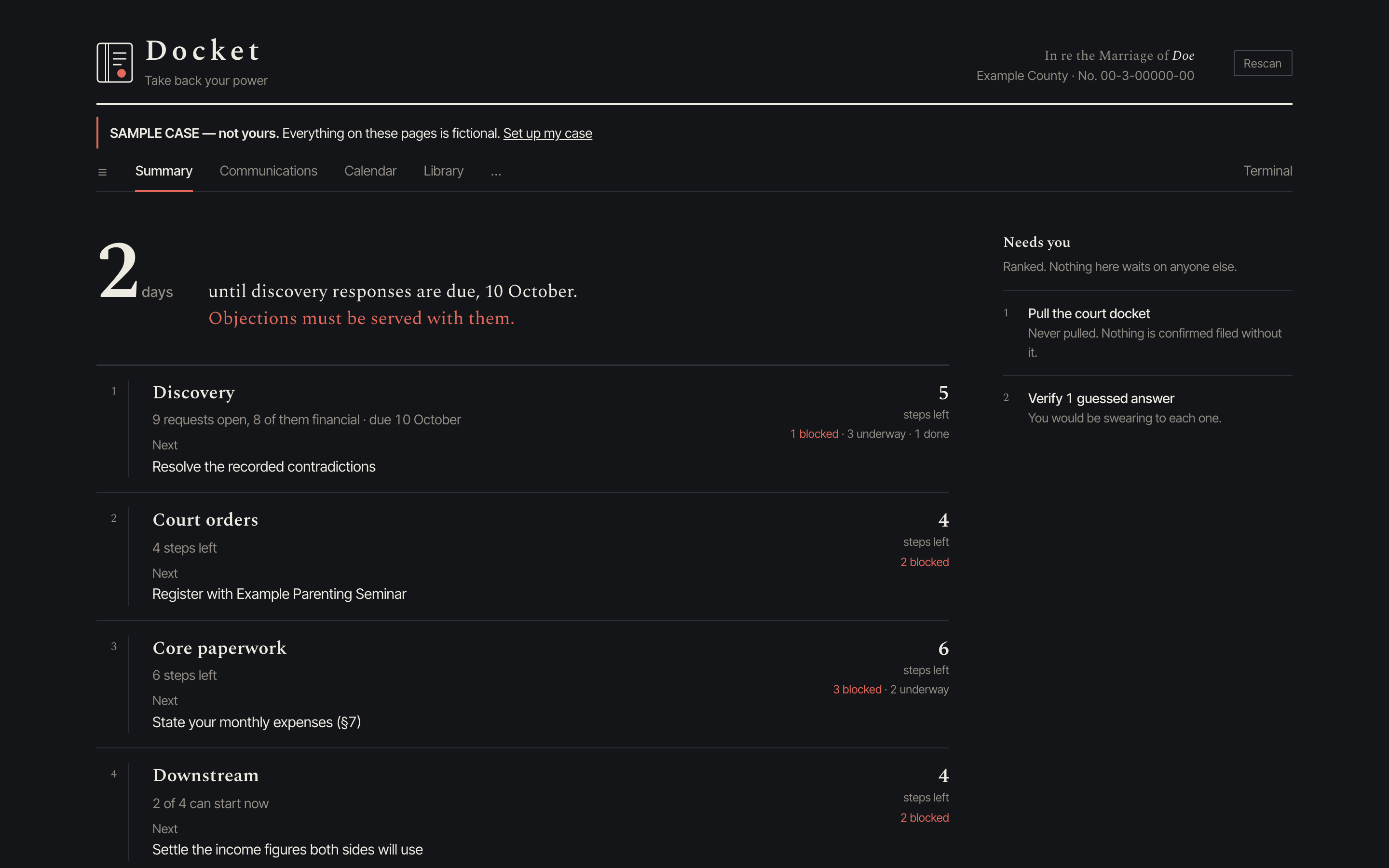
A divorce case lives in a hundred documents at once
Hundreds of interrogatories, years of statements, a financial declaration and a parenting plan, all signed under penalty of perjury, all due on deadlines that do not move. Docket turns the pile into one record and keeps it honest.
Every request, tracked
The served discovery is parsed request by request, tiered by effort and risk, and tracked from first guess to settled answer. Nothing is called answered until a person says so.
Every figure, sourced
Statements, tax forms and exports are ingested into a canonical layer. An answer may only cite a number that sits there with a document id; anything else is marked unsourced.
Every contradiction, caught
Discovery answers, the financial declaration and the parenting plan are derived from the same facts. Where two sworn documents disagree, Docket flags it before it is served.
Every deadline, counted
Court orders, hearing dates and the discovery due date drive the calendar and the work order. The summary always says how many days are left and what is blocking.
What the analysis does
| Reads | Pleadings, discovery requests, bank, card and brokerage statements, tax forms, court orders and correspondence, each catalogued with a permanent document id. Originals are never altered. |
|---|---|
| Reconciles | Balances at the date of separation, income across years, accounts across institutions. One reconciled layer feeds every form, so a figure is the same everywhere it appears. |
| Flags | Requests that reach too far back, ask for a third party's private data, or need records not in the party's possession are flagged for a person's review. The tool flags; a person decides. |
| Drafts | Answers and form fields are proposed from sourced facts only, marked as guessed or unsourced where they are, and held until a person checks them against the documents. |
| Explains | Every number on every page clicks back to the document behind it, so a reviewer, a facilitator or a lawyer can trace it in seconds. |
See it on a fictional case
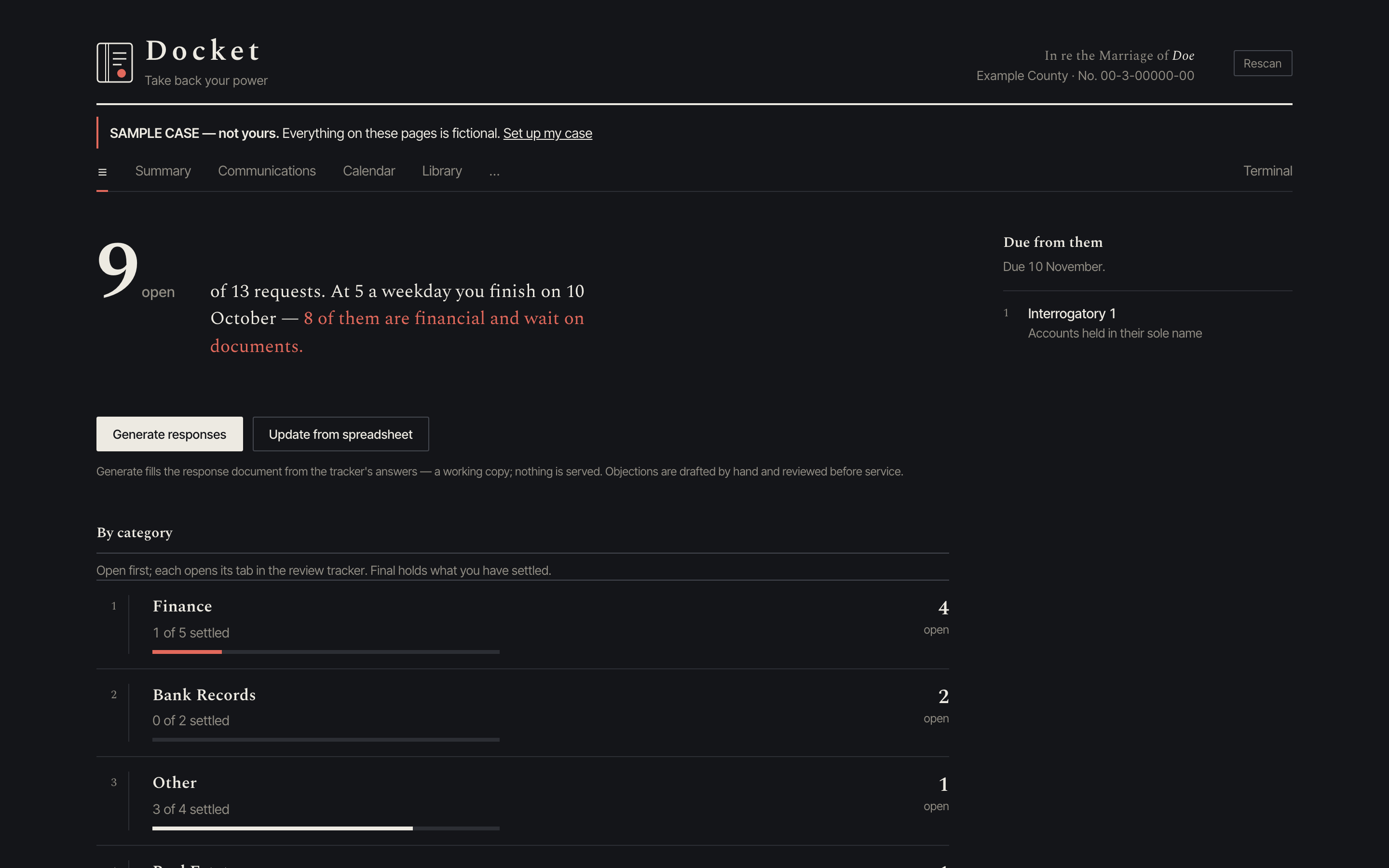
Discovery
Every request, its tier, its status and what is still missing to answer it.
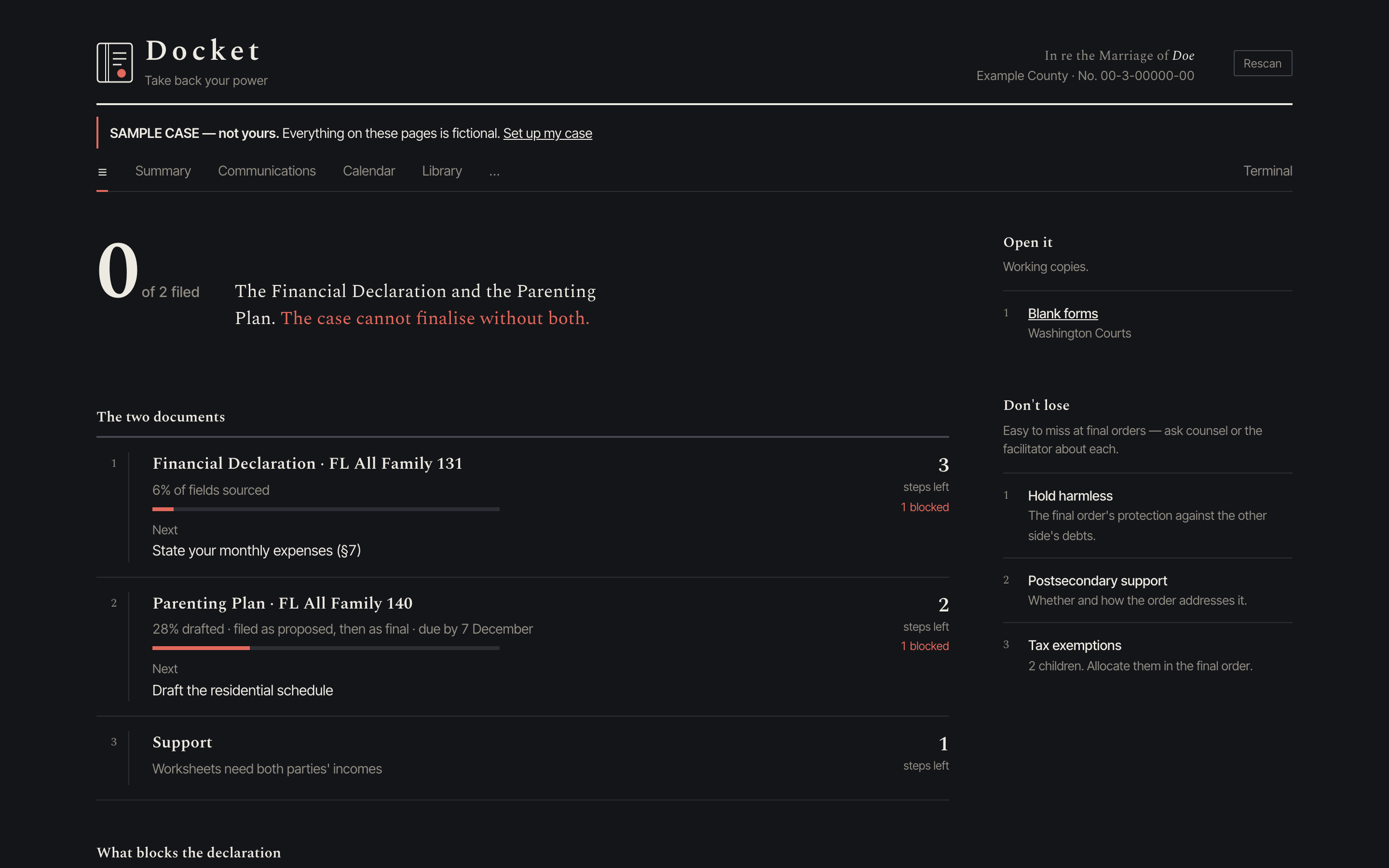
Core paperwork
The financial declaration and parenting plan, section by section, from the same facts.
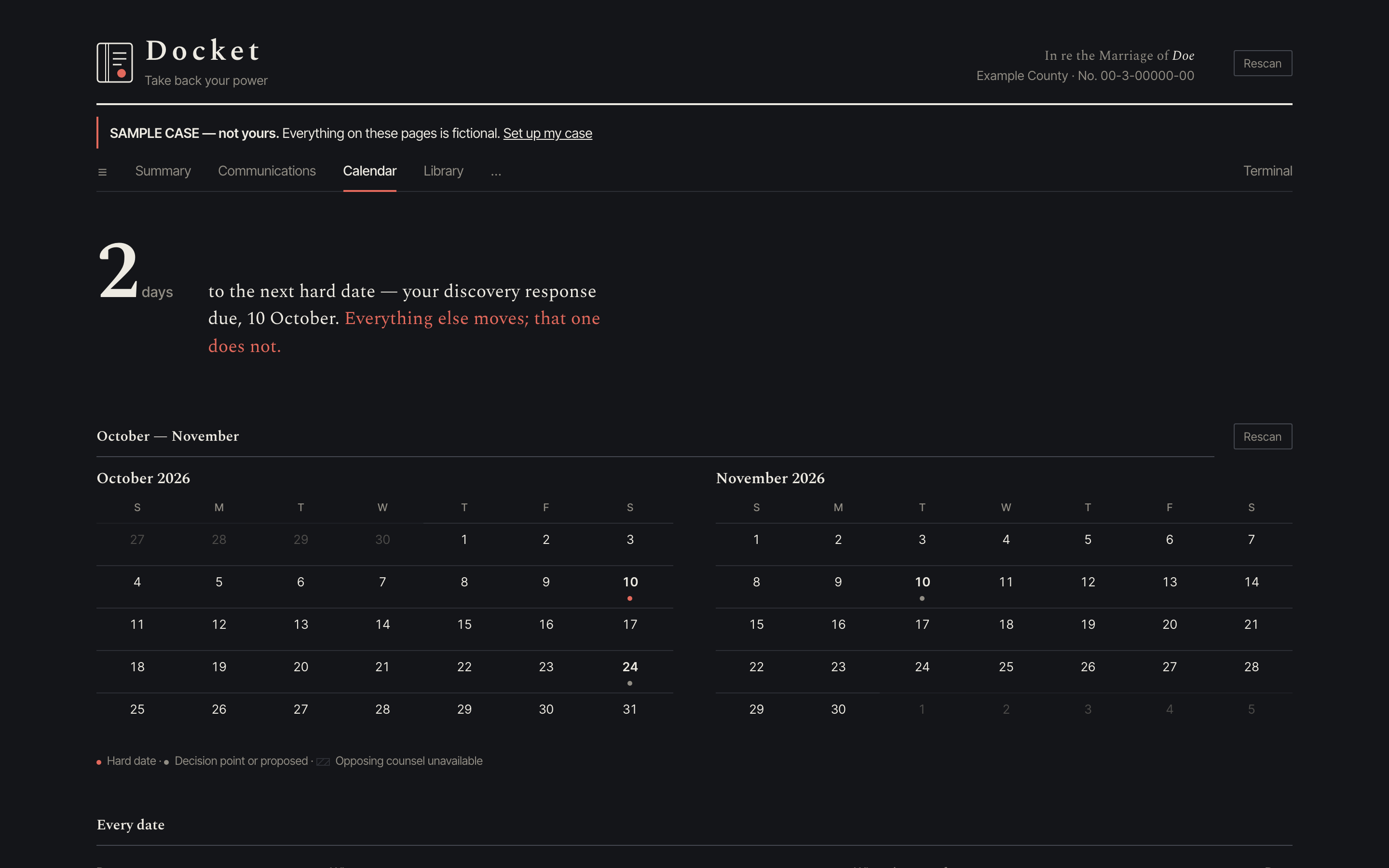
Calendar
Deadlines from the court's orders and the rules, with the days left on each.
The Does, Example County and every name, date and figure in the demo are invented.
What it won't do
Docket is a demonstration, not a lawyer, and nothing on this site is legal advice. It does not decide what is responsive, draft objections, characterize property as community or separate, or agree to anything on a party's behalf: those are a person's decisions, ideally with counsel. It never marks its own work verified. Anyone using a tool like this is responsible for everything they sign and file.